 By
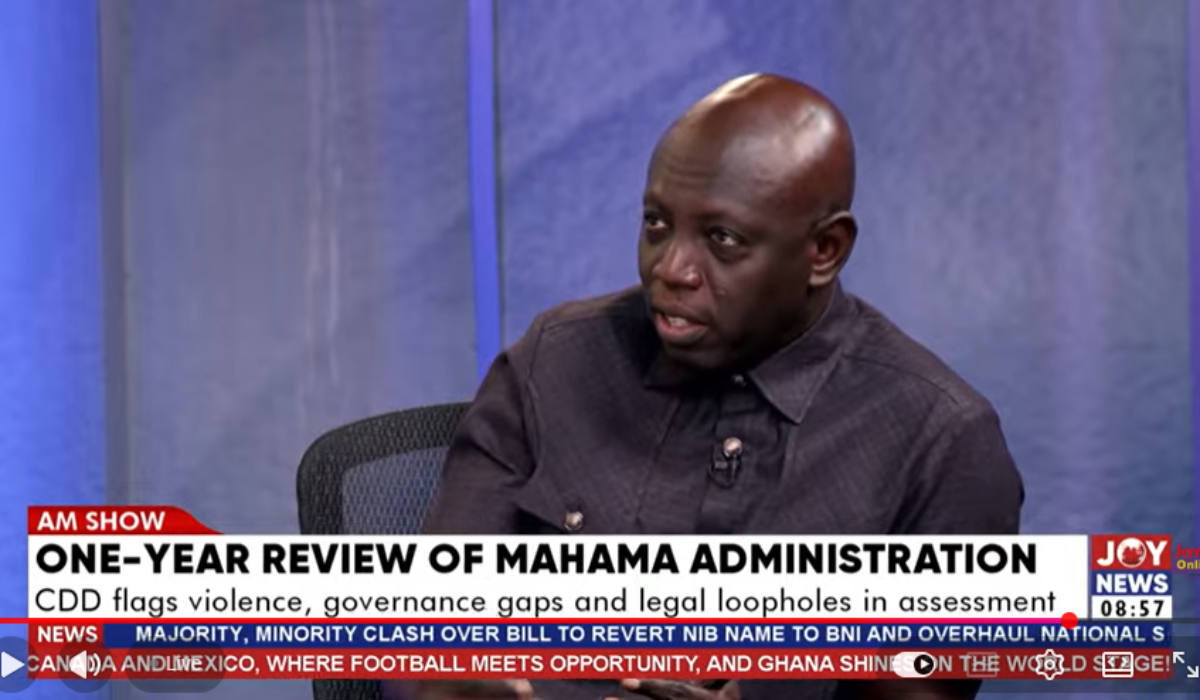
By The Dean of the Faculty of Accounting and Finance at the University of Professional Studies, Accra, Prof Isaac Boadi, says the government’s 24-Hour Economy policy could significantly boost Ghana’s productivity and attract investment — but only if it is properly implemented.
Speaking on JoyNews’ AM Show on 20 February, Prof Boadi described the signing of the 24-Hour Economy Authority Bill by President John Dramani Mahama on Thursday as “symbolically powerful”.
He said the move sends a strong signal to investors beyond Ghana’s borders that the country is serious about expanding economic activity and creating opportunities.
“The signing yesterday had an investor signalling. Beyond our borders, those investors who heard this yesterday will be preparing by now what is going to happen in this country,” he said.
Prof Boadi noted that the policy targets sectors such as manufacturing, agribusiness, agro-processing, health, retail, transportation and hospitality. He explained that these sectors depend heavily on time-sensitive operations, where efficiency and continuous activity are critical.
According to him, Ghana is currently operating below its productive capacity, with many institutions and services closing early or functioning below full potential. He argued that initiatives such as the 24-Hour Economy are essential to expanding output, creating jobs and addressing youth unemployment.
However, he cautioned that legislation alone will not deliver meaningful economic transformation.
“Economic transformation is not produced by legislation alone. It’s produced by incentives, infrastructure and institutions,” he stressed.
He warned that without proper planning, funding and execution, even well-intentioned policies could fail.
Prof Boadi also raised concerns about financing, noting that the government has indicated it would require $4 billion over the next five years to implement the programme.
“You want to do a programme… do you have the money now?” he asked, emphasising that financial readiness is critical to turning policy into tangible results.
The academic further observed that the original concept of the 24-Hour Economy appears to have evolved. Initially presented as government-driven, he said it now seems to rely more heavily on private sector participation, with the government providing a platform for businesses to fill gaps. He cautioned that such shifts could create uncertainty and undermine confidence in the policy.
Prof Boadi also questioned claims that some public institutions are already operating on a 24-hour basis, describing these as routine shift systems rather than full implementation of the policy.
“When you go to DVLA or the passport office, and they say they are operating a 24-hour economy, under which law?” he asked, adding that practical considerations — including pricing and staffing for night operations — must be clearly addressed.
Despite his reservations, Prof Boadi said he would welcome the initiative if it succeeds in boosting productivity and tackling youth unemployment.
“I would be happy any day this materialises,” he said, urging the government to move beyond slogans such as “Grow 24”, “Make 24” and “Build 24”, and focus on execution.
He reiterated that for the 24-Hour Economy to deliver real impact, legislation must be complemented by incentives, infrastructure investment and strong institutions to ensure long-term sustainability.
“Good economics begins where slogans end,” he added.
The 24-Hour Economy remains one of the government’s flagship strategies, aimed at increasing productivity, expanding exports and creating employment. Its success, however, will depend on effective implementation, adequate funding and robust institutional support to ensure the benefits reach ordinary Ghanaians and attract both local and international investors.