 By
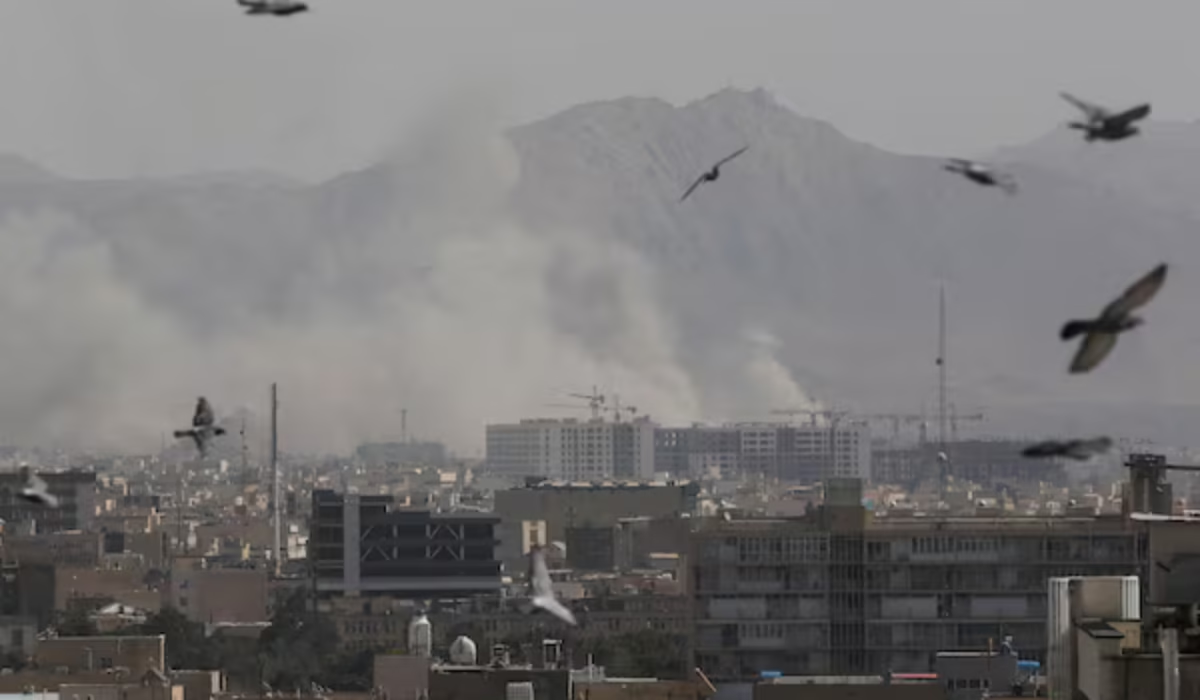
By World energy markets have been thrown into a state of high alert following a dramatic weekend of military action in the Middle East. The United States and Israel launched “Operation Epic Fury” against Iran, resulting in the assassination of Supreme Leader Ayatollah Ali Khamenei and other high-ranking regime figures.
In a direct appeal to the Iranian public, President Donald Trump called for the citizens to “take over your government.” The response from Tehran was immediate and expansive, involving missile strikes against Israel and nine other countries across the Gulf and Middle East. The Pentagon confirmed a fourth US military member was killed in the initial attacks, while several US fighter planes crashed in Kuwait in an apparent friendly fire incident.
Oil markets on edge
The fallout was instantly visible as global markets opened on Monday. Brent crude initially soared by 13% in early trading before settling at 8.5% higher. The global benchmark touched more than $82 a barrel, while natural gas prices surged by as much as 42% at their peak.
Supply chains are facing severe disruptions. Operations have been halted at Saudi Arabia’s largest oil refinery at Ras Tanura following a drone strike. Additionally, QatarEnergy has halted liquefied natural gas production. The UK Maritime Trade Operations Centre (UKMTO) confirmed that two vessels were struck and a third was hit by an “unknown projectile.” Consequently, at least 150 tankers have dropped anchor in open waters.
“Roughly one-fifth of global oil and LNG (liquefied natural gas) flows through the Strait of Hormuz. This is not an obscure canal. It is the aorta of the global energy system,” said Stephen Innes of SPI Asset Management. Homayoun Falakshahi from Kpler warned that “because of Iran’s threats, the strait is effectively closed” as insurance costs have skyrocketed.
Ghana and the African windfall
For African nations, the crisis presents a complex economic reality. While higher energy costs threaten to fuel inflation, major commodity exporters may see a significant fiscal boost.
For Ghana, the continent’s leading gold producer, the surge in gold prices to $5,426 per ounce offers a substantial silver lining. Gold has risen roughly 25% so far in 2026. This price surge could create a massive revenue windfall for other major producers like South Africa, Mali, and Burkina Faso.
Nigeria and regional exporters
Higher oil prices will directly benefit exporters like Nigeria, which exports around 1.5m barrels of oil per day. Brendon Verster, senior economist at Oxford Economics, pointed out that “Nigeria’s medium-term fiscal framework assumes global oil prices will trend between $64pb and $66pb until 2028.” With analysts warning a prolonged conflict could push prices over $100, a major windfall could be in store for Nigeria, Libya, Angola, Algeria, and Egypt.
Global production shifts and shipping reroutes
In a move to stabilize the market, eight OPEC+ countries announced they would boost production by 206,000 barrels per day in April. However, Saul Kavonic of MST Marquee noted that “the market will be watching for signs that traffic through the Strait of Hormuz returns” before prices subside. In a major shift for African maritime logistics, Danish shipping giant Maersk announced it would pause sailings through the Suez Canal and reroute ships around the Cape of Good Hope. While this increases traffic around the African coast, it adds significant time and cost to global trade.
Impact on the Ghanaian consumer
Despite the potential mining windfall, the average Ghanaian faces the prospect of rising costs at the pump. Edmund King, president of the AA, warned that the “turmoil and bombing… will inevitably lead to price hikes” at petrol pumps globally. Subitha Subramaniam, chief economist at Sarasin & Partners, warned that if prices remain high, “it will start to cascade into other prices such as food, agriculture, industrial commodities and that’s just going to really bleed into inflation.” This could force Ghana’s monetary authorities to take a more cautious approach to interest rate cuts.
Fear gauge and financial flight
The global “fear gauge,” or VIX index, has surged by nearly 17% since last week. In London, the FTSE 100 fell 1%, with major banks like Barclays and Standard Chartered seeing share prices slide. “When markets are fragile, they do not need a knockout blow. They just need another weight on the bar,” Innes remarked.
While Ghana’s gold sector may thrive, the broader economy must navigate a landscape of sky-high shipping costs and potential inflationary “bleeding” into the cost of living.
Gemini said
Middle East war triggers global energy shock and African market volatility
By Nana Karikari, Senior Global Affairs Correspondent
ACCRA, Ghana — World energy markets have been thrown into a state of high alert following a dramatic weekend of military action in the Middle East. The United States and Israel launched “Operation Epic Fury” against Iran, resulting in the assassination of Supreme Leader Ayatollah Ali Khamenei and other high-ranking regime figures.
In a direct appeal to the Iranian public, President Donald Trump called for the citizens to “take over your government.” The response from Tehran was immediate and expansive, involving missile strikes against Israel and nine other countries across the Gulf and Middle East. The Pentagon confirmed a fourth US military member was killed in the initial attacks, while several US fighter planes crashed in Kuwait in an apparent friendly fire incident.
Oil markets on edge
The fallout was instantly visible as global markets opened on Monday. Brent crude initially soared by 13% in early trading before settling at 8.5% higher. The global benchmark touched more than $82 a barrel, while natural gas prices surged by as much as 42% at their peak.
Supply chains are facing severe disruptions. Operations have been halted at Saudi Arabia’s largest oil refinery at Ras Tanura following a drone strike. Additionally, QatarEnergy has halted liquefied natural gas production. The UK Maritime Trade Operations Centre (UKMTO) confirmed that two vessels were struck and a third was hit by an “unknown projectile.” Consequently, at least 150 tankers have dropped anchor in open waters.
“Roughly one-fifth of global oil and LNG (liquefied natural gas) flows through the Strait of Hormuz. This is not an obscure canal. It is the aorta of the global energy system,” said Stephen Innes of SPI Asset Management. Homayoun Falakshahi from Kpler warned that “because of Iran’s threats, the strait is effectively closed” as insurance costs for vessels have skyrocketed.
Ghana and the African windfall
For African nations, the crisis presents a complex economic reality. While higher energy costs threaten to fuel inflation, major commodity exporters may see a significant fiscal boost.
For Ghana, the continent’s leading gold producer, the surge in gold prices to $5,426 per ounce offers a substantial silver lining. Gold has risen roughly 25% so far in 2026. This price surge could create a massive revenue windfall for other major producers like South Africa, Mali, and Burkina Faso.
Nigeria and regional exporters
Higher oil prices will directly benefit exporters like Nigeria, which exports around 1.5m barrels of oil per day. Brendon Verster, senior economist at Oxford Economics, pointed out that “Nigeria’s medium-term fiscal framework assumes global oil prices will trend between $64pb and $66pb until 2028.” With analysts warning a prolonged conflict could push prices over $100, a major windfall could be in store for Nigeria, Libya, Angola, Algeria, and Egypt.
Global production shifts and shipping reroutes
In a move to stabilize the market, eight OPEC+ countries announced they would boost production by 206,000 barrels per day in April. However, Saul Kavonic of MST Marquee noted that “the market will be watching for signs that traffic through the Strait of Hormuz returns” before prices subside. In a major shift for African maritime logistics, Danish shipping giant Maersk announced it would pause sailings through the Suez Canal and reroute ships around the Cape of Good Hope. While this increases traffic around the African coast, it adds significant time and cost to global trade.
Impact on the Ghanaian consumer
Despite the potential mining windfall, the average Ghanaian faces the prospect of rising costs at the pump. Edmund King, president of the AA, warned that the “turmoil and bombing… will inevitably lead to price hikes” at petrol pumps globally. Subitha Subramaniam, chief economist at Sarasin & Partners, warned that if prices remain high, “it will start to cascade into other prices such as food, agriculture, industrial commodities and that’s just going to really bleed into inflation.” This could force Ghana’s monetary authorities to take a more cautious approach to interest rate cuts.
Fear gauge and financial flight
The global “fear gauge,” or VIX index, has surged by nearly 17% since last week. In London, the FTSE 100 fell 1%, with major banks like Barclays and Standard Chartered seeing share prices slide. “When markets are fragile, they do not need a knockout blow. They just need another weight on the bar,” Innes remarked.
African Economic Outlook
As the dust settles on the initial strikes of “Operation Epic Fury,” the trajectory of the African economy remains tethered to the duration of the conflict. While the gold-driven fiscal cushion offers temporary relief for nations like Ghana, a protracted blockade of the Strait of Hormuz could transform a manageable market shock into a systemic cost-of-living crisis. For policymakers from Accra to Abuja, the coming weeks will require a delicate balancing act: leveraging unexpected commodity windfalls to shield vulnerable citizens from the inevitable “bleed” of global energy inflation.