 By
By A Democracy and Development Fellow at the Centre for Democratic Development (CDD-Ghana), Professor John Osae-Kwapong, has weighed in on the growing public outcry surrounding the government’s handling of illegal mining, or galamsey.
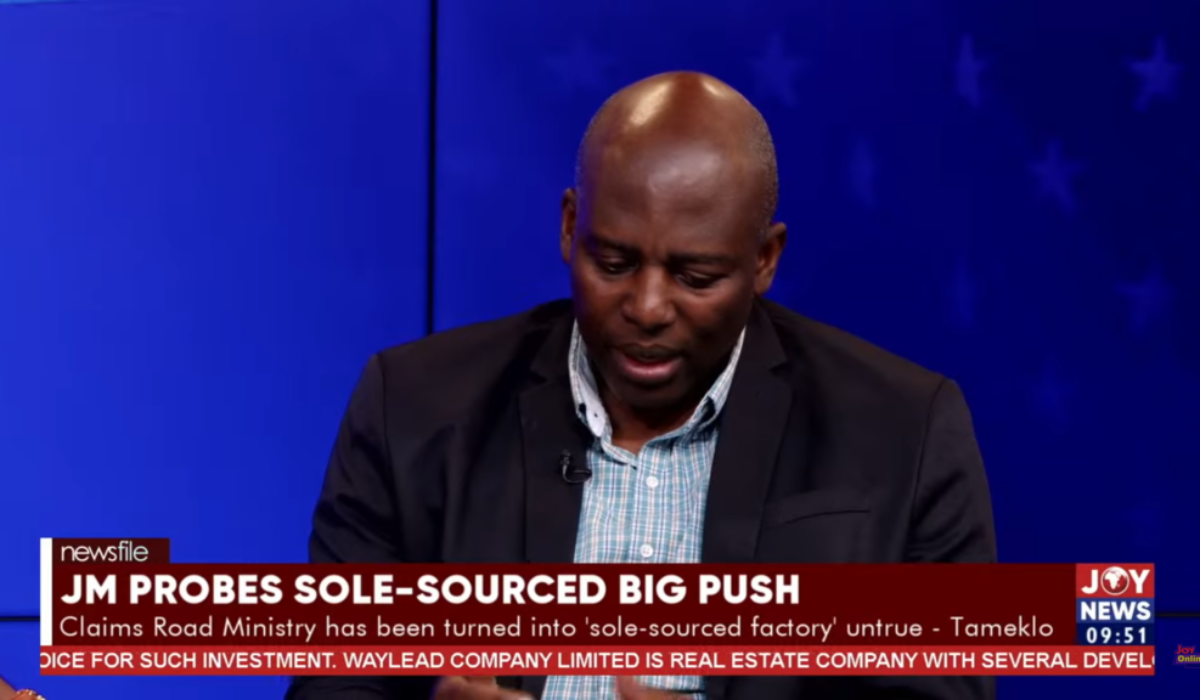
Speaking on JoyNews’ Newsfile on Saturday, April 4, the academic and policy expert addressed the implications of the government’s decision to halt the controversial “Galamsey Tax,” which had been exposed in a JoyNews documentary.
His comments come at a time when a rising chorus of voices is calling for the punishment of Metropolitan, Municipal, and District Chief Executives (MMDCEs) allegedly complicit in facilitating or failing to curb illegal mining in their districts.
The government’s decision to suspend the tax, which had been proposed as a way to raise funds for environmental restoration, has only served to heighten public concern and frustration, particularly in light of the alleged involvement of local government officials.
In his remarks, Professor Osae-Kwapong acknowledged the growing frustration within the public, particularly in response to the MMDCEs who are perceived as being either complicit in or indifferent to illegal mining activities.
He stated that the demands for the punishment of these officials were not unreasonable, given the widespread destruction caused by galamsey.
“I don’t think they are being unreasonable,” said Prof. Osae-Kwapong. “The environmental issues, the health issues, and the overall damage that galamsey poses to all of us—these are real concerns. In their minds, the only thing that can stop this, or at least one key thing in this fight, is decisive action. Punishment for those who facilitate it and those who engage in it is the necessary step they see.”
The scale of the environmental degradation caused by galamsey is vast, with illegal mining operations decimating forests, polluting water sources, and leaving the land unsuitable for agricultural use.
The toxic chemicals used in these operations, including mercury and cyanide, have led to serious health risks for local populations, exacerbating the crisis.
Prof. Osae-Kwapong acknowledged the steps taken by President John Mahama in responding to the illegal mining crisis.
After the issue was brought to light in various districts, the president issued a directive for investigations to be carried out not only in the affected areas highlighted in the JoyNews documentary but also in other districts across the country where galamsey activities are rampant.
“Once attention was drawn to the issue, the president did ask that a broader review be conducted—not just in the particular district, but across other districts as well,” Prof. Osae-Kwapong said, giving the president some credit for responding to the issue with an executive order aimed at tackling the galamsey menace.
However, he was quick to emphasise that while the president’s directive was a step in the right direction, it should not be the end of the matter.
He warned that the fight against galamsey could not be won with mere statements and directives. Instead, there must be consistent monitoring and enforcement to ensure that those responsible for facilitating or enabling illegal mining are held accountable.
“I just hope it doesn’t end at the directive to stop doing this,” he stated. “What’s important now is that there’s active monitoring and enforcement.”
The central issue in the fight against galamsey, according to Prof. Osae-Kwapong, lies in the government’s ability to enforce its directives effectively.
While issuing orders to cease illegal mining activities is crucial, they must be backed up by systematic monitoring to ensure compliance.
“If, during the course of active monitoring, you notice that certain districts are still being defiant, then those responsible should be charged with non-compliance and face administrative penalties,” he said.
He stressed the importance of ensuring that MMDCEs and other local government officials who fail to implement the president’s directive are held accountable.
Without effective enforcement, he warned, the illegal mining crisis would continue unabated.
“Penalties must be applied for non-compliance,” he added. “If certain districts continue to allow illegal mining, there should be consequences, and those in charge should be penalised.”
The tax, which had been intended to support the restoration of damaged ecosystems, was revealed in a JoyNews documentary and quickly became a point of contention.
Prof. Osae-Kwapong acknowledged that the tax may have been a contentious measure, but he expressed concern that halting it might be a missed opportunity to generate funds needed to address the environmental costs of illegal mining.