 By
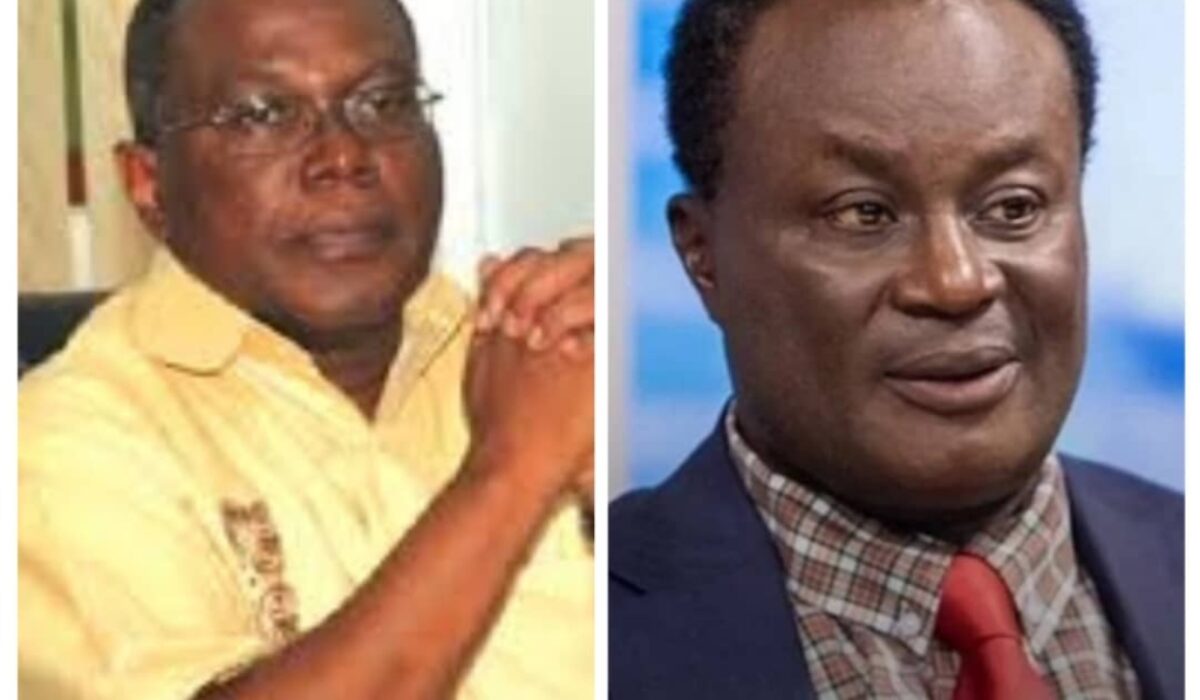
By Chairman of the National Development Planning Commission (NDPC), Dr Nii Moi Thompson, has criticised media personality and self-styled historian Anokye Frimpong over what he describes as repeated distortions of Ghana’s political and independence history, warning that such narratives could undermine national cohesion.
In a Facebook post, Dr Thompson accused Mr Frimpong of spreading exaggerated and, in some cases, false accounts of key historical events, calling on media houses to prioritise accuracy in their programming.
“Most of what our ‘historian’ friend palms off as history are either exaggerations or outright fabrications,” he wrote. “Media houses should host professional historians — or at least people who are honest with historical facts — to save Ghanaian history.”
Dr Thompson, who currently heads the country’s main development planning body, argued that inaccurate storytelling poses a serious risk to national development, stressing that history remains central to Ghana’s identity and long-term progress.
He challenged claims that the United Party (UP) was formed ahead of the 1956 elections, explaining that the party was established in November 1957, several months after independence.
According to him, the UP emerged in response to post-independence political developments under Kwame Nkrumah, including efforts to curb tribal and secessionist movements through the Avoidance of Discrimination Act.
Dr Thompson also disputed Mr Frimpong’s account of the 1948 ex-servicemen’s protest, which he described as inconsistent with established historical records.
He rejected claims that the protest petition was dictated by Ebenezer Ako-Adjei and written by Nkrumah, insisting that available evidence does not support that version.
“This never happened,” he stated, citing findings from the Watson Commission and the writings of George Padmore.
According to him, the petition was led and signed by the ex-servicemen themselves under the leadership of B. E. A. Tamakloe, with official correspondence addressed directly to their association.
The NDPC Chairman further criticised claims linking the origin of Ghana’s “Black Star” symbol to 18th-century philosopher Anton Wilhelm Amo.
He argued that historical evidence points instead to the influence of Marcus Garvey, whose Pan-African philosophy inspired Black empowerment movements in Africa and the diaspora.
Dr Thompson noted that Nkrumah himself acknowledged the impact of Garvey’s writings, adding that Ghana’s adoption of the Black Star was a tribute to that legacy and to institutions such as the Universal Negro Improvement Association.
Beyond the specific examples, he warned that misinformation could fuel unnecessary political and ethnic tensions.
“On some occasions, these fabrications create needless disaffection towards certain ethnic groups,” he wrote. “It’s bad for Nkrumah’s nation-building agenda.”
Ghana’s independence history and early political developments remain central to public debate, with historical commentary featuring prominently on radio, television and social media platforms.
While such discussions have helped revive public interest in the country’s past, critics say they have also created space for unverified or misleading narratives.
Dr Thompson is therefore urging media organisations to strengthen editorial standards and involve trained historians in public discourse.
“Our history belongs to all of us,” he wrote. “If we get it wrong, we risk misleading the next generation and weakening the foundations of our development.”