 By
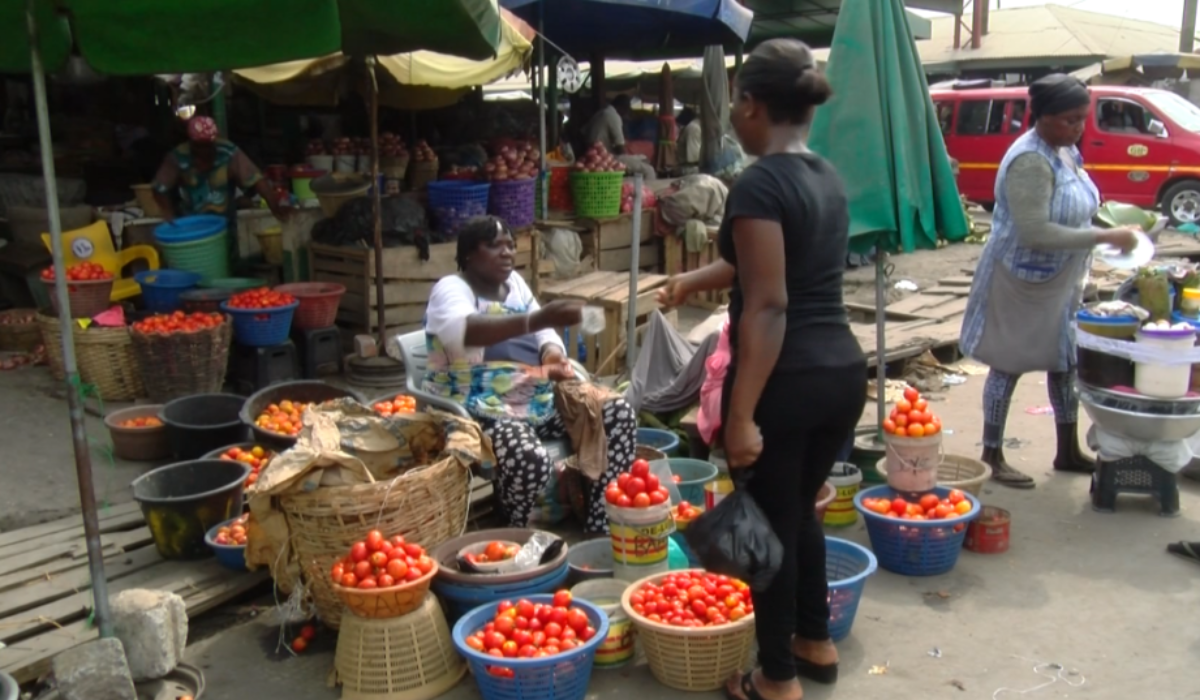
By Tomato prices are rising across several markets in Accra following last week’s deadly attack on Ghanaian traders in neighbouring Burkina Faso, with market women warning that the resulting shortage is driving costs higher and leaving consumers struggling.
Traders say the disruption, which reportedly led to the killing of at least eight Ghanaian traders, has forced many importers to scale back operations, creating a shortfall that is already pushing prices beyond the reach of some buyers.
Speaking to JoyNews on Monday, 23 February, a tomato trader explained that although tomatoes remain abundant in Burkina Faso, supply to Ghana has been affected by security concerns. As a result, some traders are now sourcing stock from Abidjan at significantly higher prices.
“There is abundance of tomatoes, but it’s not in Ghana — it’s in Burkina Faso,” she said. “The ones we have now are from Abidjan, and they are quite expensive. We are hoping the situation that caused the death of about eight traders will be resolved quickly.”
She appealed to consumers to be understanding when prices are quoted, noting that traders are also grappling with rising import costs.
The increase has triggered intense bargaining in several markets. Quantities that previously sold for less are now going for GH¢500, GH¢400, GH¢200 and GH¢100, depending on size and quality.
Some consumers say the new prices are difficult but unavoidable. Joseph Ansah, a buyer at the market, said he had no choice but to purchase the commodity despite the high cost.
“Actually, the price itself is very difficult because when you see the quantity they gave me for GH¢50, it’s very hard,” he said. “But what am I going to do? It’s the situation, so we have to manage it like that.”
Others, however, have abandoned their purchases altogether. In one instance, a trader declined to sell a tin of tomatoes for GH¢30, insisting on GH¢35, prompting a customer to walk away.
The price hikes are also affecting sellers, with some temporarily exiting the tomato trade due to high procurement costs. One trader said she had stopped selling tomatoes for about three weeks because prices had become too expensive to sustain her business.
“I have been selling tomatoes since I was a child; my mother taught me the trade,” she said, adding that she has switched to selling pepper and pear until prices stabilise.
Meanwhile, traders who travel outside Ghana to purchase tomatoes are calling for enhanced security, urging authorities to provide police escorts for cross-border trips to ensure their safety.
They are also appealing to the government to invest more in local tomato cultivation to reduce dependence on imports and shield the supply chain from external shocks.
The developments underscore the vulnerability of Ghana’s food supply system to regional insecurity and cross-border trade disruptions. Consumers warn that if prices continue to climb, many households may turn to tomato paste as an alternative, while traders hope the situation will normalise and stabilise the market.