 By
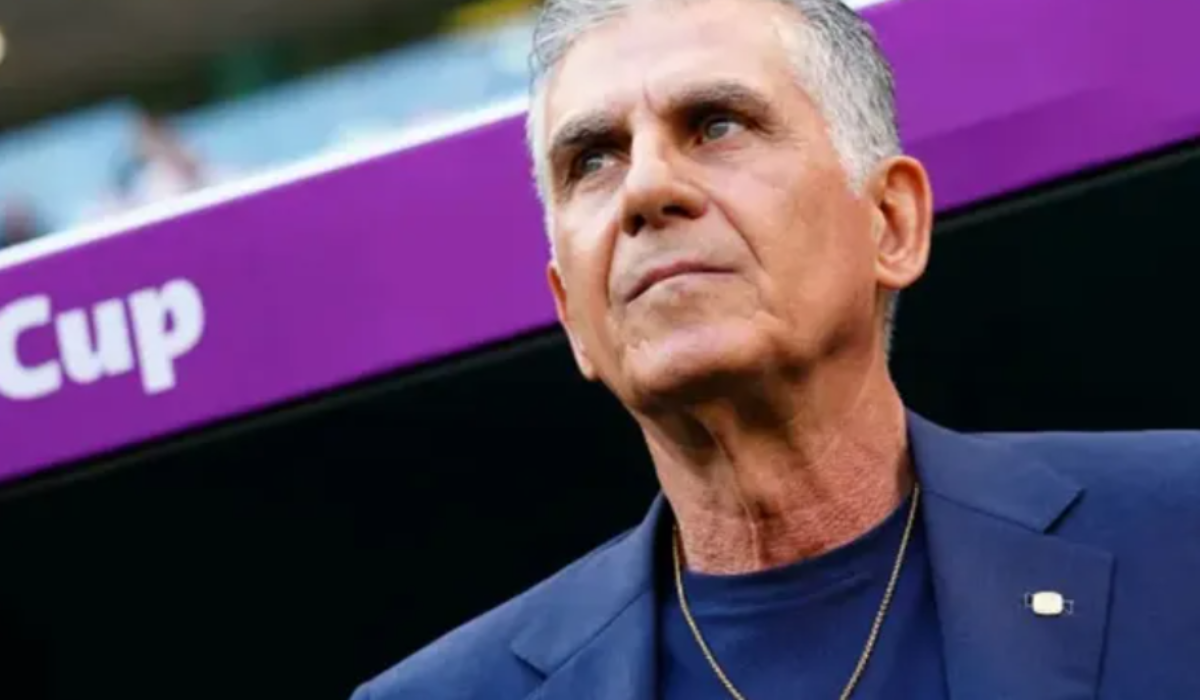
By The departure of Carlos Queiroz as head coach of the Ghana national football team is less a conclusion and more an indictment of the cyclical instability that has long haunted the Black Stars. While the end of his short-term contract follows the team’s World Cup exit, it serves as a final, sobering chapter in a recurring pattern of administrative volatility.
His three-month tenure acts as a diagnostic study of a national footballing establishment struggling to reconcile its rich heritage with modern tactical requirements. Although he successfully sanitised a chaotic locker room, his exit exposes a fundamental misalignment between a federation prioritising short-term survival and a footballing nation desperate for a coherent, long-term identity.
The transition was always intended to be a stopgap rather than a cure; yet, the failure to progress beyond the round-of-32 against Colombia necessitates a deeper introspection into what Ghanaian football truly demands of its leadership.
Stability versus Tactical Rigidity
Queiroz arrived in April to stabilise a team demoralised by heavy losses to Austria (5-1) and Germany (2-1). He succeeded in imposing the structural discipline typical of his Portuguese coaching pedigree, which had been conspicuously absent under his predecessor, Otto Addo. By prioritising organisation over fluidity, he guided Ghana out of a difficult group and into the knockout phase, providing a veneer of respectability that had been lost for years.
Jordan Ayew offered a candid assessment of this rapid transition, noting, “Sometimes you need five months, six months for people to understand your ways. He came in, and after a month or two we’d started implementing what he wanted. He asked us what to do, and it worked well up to some point.” However, this tactical pragmatism became a liability the moment the Black Stars faced the necessity of offensive initiative.
The Cost of Conservative Coaching
The tournament exit illustrated the ceiling of Queiroz’s cautious methodology. Failing to register a single shot on target against Colombia was not merely a performance aberration; it was a symptom of a systemic inability to transition from defensive containment to genuine attacking threat. By favouring defensive substitutions in critical moments, introducing Elisha Owusu for Kwasi Sibo on the hour mark and withholding dynamic threats like Brandon Thomas-Asante and Christopher Bonsu Baah, Queiroz signalled a lack of trust in his squad’s forward potential. He essentially coached not to lose rather than playing to win. The stagnation of senior figures like Jordan Ayew, who ended the campaign without a single shot, reflects a tactical environment thprioritisedzed caution over the liberation of Ghana’s more creative, albeit younger, attacking talents.
Structural Failures Beyond the Pitch
Queiroz’s exit comments suggest he understood the limitations of his own mandate. He utilised his farewell to challenge the Ghana Football Association to look beyond the touchline, correctly identifying that coaching changes alone cannot solve deeper institutional deficiencies. By choosing to announce his departure via social media before the GFA provided an official statement, Queiroz may have sought to control his own narrative. This preemptive move highlights a potential breakdown in communication or trust between the manager and the federation. It serves as a stark reminder of the disconnect that has often defined the GFA’s relationship with its technical staff.
Queiroz stated, “Football, like life, teaches us one timeless lesson: you either win, or you learn.” His perspective on the path forward was clear, as he remarked, “I leave this journey with pride in what we achieved, but also with the healthy dissatisfaction of those who always wanted more. Reaching a higher level should never be the destination—it should be the beginning of even greater ambitions.” His final assessment remains a stern critique of the current administrative environment: “The future of the Black Stars will not be built only on the pitch. Black Stars success must start off the field, by creating the best possible environment to prepare, protect and develop.
Ghana’s extraordinary football talent.” Queiroz also expressed his gratitude, adding: “To my President and Board, thank you so much for the opportunity to serve the Ghana National Football Team. It was an honour and privilege to serve the country and the Black Stars.” He additionally noted, “To my players and staff, my deepest gratitude for your courage, commitment and unwavering dedication to the team.” To the fans, he concluded, “We cannot claim complete sporting satisfaction, but we can proudly say that we honoured the colours of Ghana and restored respect and credibility to the Black Stars on football’s greatest stage.”
He concluded his farewell with a message of hope: “Thank you, Ghana. The journey starts now. To the future.” His appointment on April 23, 2026, by Minister for Sports and Recreation Mr Kofi Adams, was explicitly framed as a short-term, four-month arrangement to navigate the World Cup, with future extensions contingent on tournament performance.
A Call for Strategic Clarity
The fundamental question remaining for the Ghana Football Association is whether they are prepared to abandon the cycle of short-term fixes for a project rooted in a clear, defined playing philosophy. Queiroz acted as an emergency stabiliser, but the Black Stars’ next step must be transformative. The talent is present, but the structure remains fractured. Ghana’s footballing future depends on whether the federation views the last three months as a blueprint for professionalised preparation or merely another chapter in a revolving-door management culture. If the goal is truly to return to the pinnacle of the African game, the administration must move past the temptation of stop-gap solutions and invest in a long-term architect capable of blending defensive stability with the natural, expressive flair inherent in Ghanaian football.
National Unity and the Horizon of Possibility
The discourse surrounding Queiroz’s departure resonates deeply with a passionate Ghanaian public that has grown weary of inconsistent results on the continental and global stages. Supporters now demand more than just tactical explanations; they seek a transparent roadmap from the GFA that prioritises the nation’s pride over administrative expediency.
The collective yearning for a return to the Black Stars’ glory days requires a bridge between the federation’s strategic decisions and the fans’ expectations. This transition period is a crucial moment for national unity. If handled with vision, it can move the discourse from frustration toward a renewed, shared commitment to Ghana’s footballing resurgence.
If the goal is truly to return to the pinnacle of the African game, the administration must move past the temptation of stop-gap solutions. They must invest in a long-term architect. This leader must be capable of blending defensive stability with the natural, expressive flair inherent in Ghanaian football. Achieving greatness in the modern era requires more than just a managerial change.
It demands a radical, unified commitment from all stakeholders. They must build an ecosystem that nurtures talent from the grassroots to the global stage. Whether the GFA embraces this necessary evolution or reverts to historical patterns will define the next decade of Ghanaian football. This ensures that the legacy of recent struggles is eventually eclipsed by sustainable, long-term success.