 By
By The co-founder of super-app Gojek who became Indonesia’s education minister has been sentenced to several years in jail for corruption.
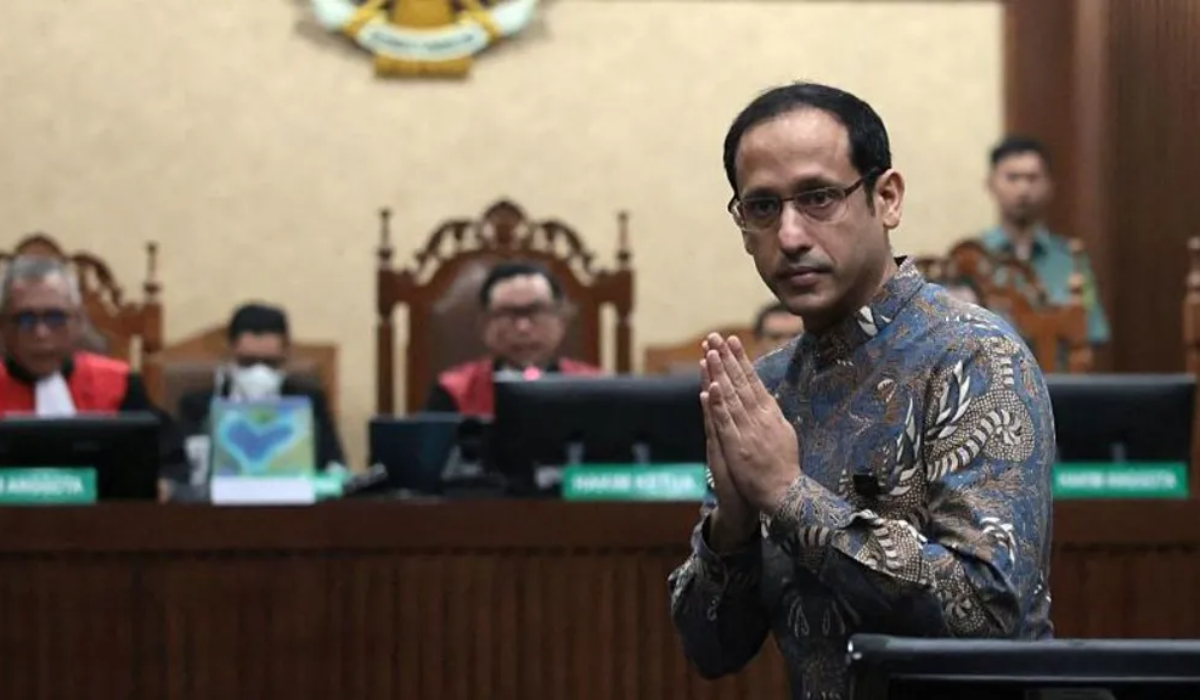
Nadiem Makarim, 41, was found guilty of manipulating a school laptop procurement deal during his time in government to enrich himself. He had pleaded not guilty.
He received a 10-year prison sentence, but faces more jailtime as he is unable to pay restitution.
Nadiem left Gojek in 2019 to join the government of previous president Joko Widodo, and served as education minister until 2024. Critics of the Indonesian authorities say the case against him was based on little evidence and that he is the victim of a government campaign targeting political opponents.
Gojek is a popular app in South East Asia with more than 170 million people using it for transport and digital payments. Nadiem has gained a large following as the co- founder of one of Indonesia’s most successful tech companies.
In addition to the 10-year prison term, Nadiem was ordered to pay restitution of 809 billion rupiah ($45m, £34m) – the amount he was found guilty of enriching himself with – or serve an additional five years.
Nadiem has said that as he is unable to pay this amount, he has effectively been sentenced to 15 years.
He also faces a one billion rupiah fine. If unpaid, he will serve an additional 190 days in jail.
The case centres on the education ministry’s procurement of Chromebook laptops for schools in Indonesia from 2021 to 2022.
Controversial laptop deal
Prosecutors alleged that the Chromebooks were purchased even though the ministry had determined in 2018 that the computers required an internet connection to be used, which made them unsuitable in remote areas of Indonesia where internet connectivity is difficult.
The ministry went ahead with the purchase after Nadiem met with Google representatives in 2020, said prosecutors.
Prosecutors alleged that Nadiem favoured Google – a Gojek investor – when the procurement was made, saying he created tender specifications that only fit the Chrome system to “make Google the sole controller of the education ecosystem in Indonesia”.
Nadiem had remained as a minority shareholder in Gojek while he was the education minister.
They said Nadiem’s actions violated the government’s anti-corruption pledges and harmed the education system. He was accused of causing $125m in state losses.
He was also accused of benefiting from 809 billion rupiah worth of transactions involving Gojek’s holding company.
Nadiem denied that Google’s investments in Gojek were connected to the procurement, and argued that the ministry’s choice to purchase the Chromebooks resulted in reduced costs for the government.
He also argued that the 809 billion rupiah had always remained within company accounts and that he had never touched the money personally.
In the end a panel of judges ruled there was a conflict of interest and that the procurement was designed to serve Nadiem’s corporate interests and relationships with tech giants.
Earlier on Tuesday before the trial began, dozens of supporters including Gojek drivers turned up at the Jakarta courthouse. They carried white banners with the words “We are with Nadiem” and “Free Nadiem”.
“It’s been difficult for almost 10 months. As a family, we have continued to pray, fight, and stand by him throughout this time,” Nadiem’s mother-in-law, Sania Makki, told BBC News .
During the hearing, dozens of supporters – including drivers wearing Gojek jackets – sat in a nearby room where the proceedings were being streamed live.
When the judge delivered the verdict and sentence, Nadiem appeared visibly emotional and began crying, while supporters outside the courtroom booed loudly.
He was still in tears when he exited the courtroom and hugged several of his supporters.
Nadiem told reporters he would file an appeal. “I do not know what words I can use to explain how I feel today,” he said.
“I do not know whom I should ask for help, or where I can seek justice. My only hope is in the Indonesian people, in those who still believe that truth still exists in this country.”
‘Feeling of fear’
Some analysts have questioned the case against Nadiem.
“The eradication of corruption is being used to attack those who are not liked, or those who are critical of people in power,” lawyer and activist Todung Mulya Lubis told BBC News.
Observers also say a guilty verdict could risk disillusioning young Indonesians who want to pursue a career in government.
“There’s a feeling of fear. It’s like, so if someone that’s from outside of the government tries to work with the government or tries to do good in their own field in this country, am I going to get criminalised?” artist and political activist Andovi da Lopez told BBC News.
“I can’t speak for everybody, but in my circle, there’s this fear and people just say, ‘just don’t work with the government, just don’t.’ And that fear is real,” he said.
To young Indonesians, Nadiem is seen as someone who “wants to bring change but is trapped in a government system that has systemic problems,” said Usman Hamid, executive director of Amnesty International Indonesia.
“Maybe [Nadiem] was perceived as forcing [the government] to innovate policies, and maybe he wanted to do it too fast,” he added.
Other observers have drawn parallels between Nadiem’s case and two other political allies of former President Joko Widodo – ex-trade minister Tom Lembong and party official Hasto Kristiyanto.
Lembong and Kristiyanto were convicted of corruption but the current president Prabowo Subianto pardoned them in the spirit of national reconciliation.
The verdict also comes at a time of heightened unrest among the youth in the country, as the cost of living rises and the value of the local currency, the rupiah falls.
There has been rising anger at Prabowo’s government and in recent weeks, protest marches have been staged across the country against policies that activists say is driving Indonesia to bankruptcy.