 By
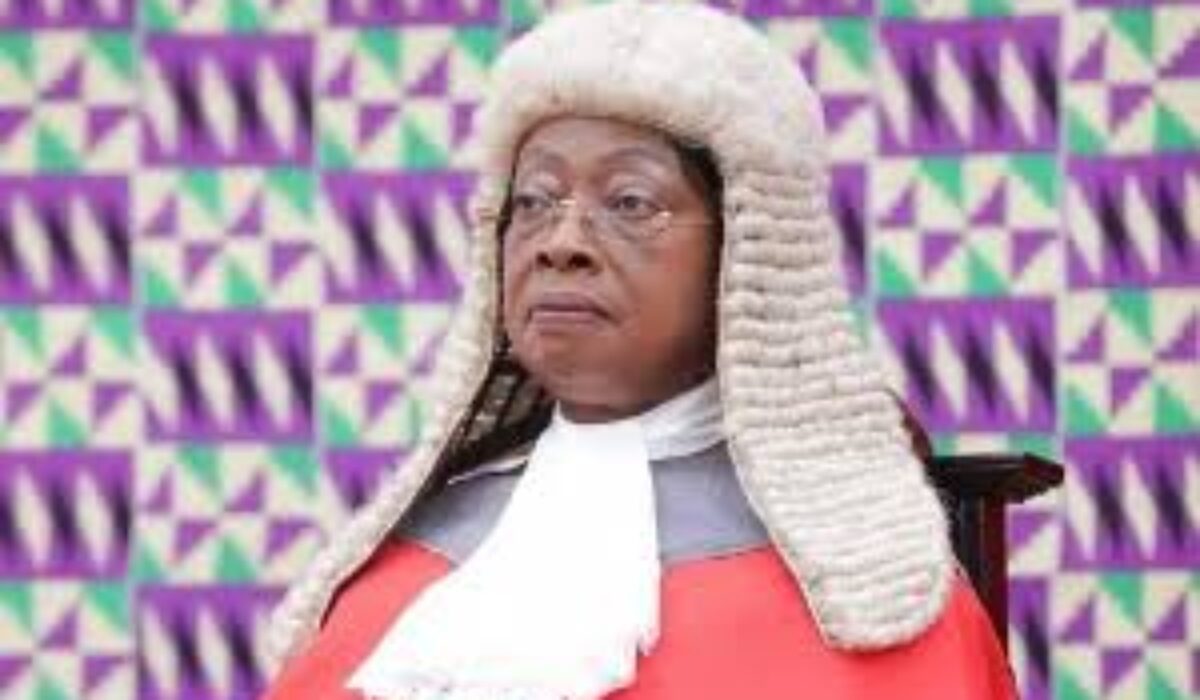
By A senior Ghanaian legal academic has argued that the circumstances surrounding former Chief Justice Sophia Akuffo’s resignation from the Council of State were set in motion from the very moment she was selected for the body , a choice he says bypassed a more senior and constitutionally appropriate candidate.
Kwaku Ansa-Asare, Dean of the Faculty of Laws at Mountcrest University College and former Director of the Ghana School of Law, made the remarks on Newsfile on Saturday, days after President John Dramani Mahama formally accepted Akuffo’s resignation. The Presidential Spokesperson and Minister of State for Government Communications, Felix Kwakye Ofosu, confirmed on June 15, 2026, that Akuffo had submitted a resignation letter in September 2025 and had not attended any Council of State meetings since then.
Ansa-Asare said the government’s handling of the announcement — confirming the resignation only after it leaked to the media — was itself a problem.
“A person resigning in September and the government coming out under public pressure to make some half-truth — it should be roundly condemned,” he said.
“The next time something like this happens, the government must come clean and let the whole country know.”
But his deeper criticism was directed at the original appointment. Citing Article 89 of the Constitution, which provides for the inclusion of a retired Chief Justice in the Council of State, Ansa-Asare argued that former Chief Justice Georgina Theodora Wood — who served for ten years and was therefore the most senior living retired Chief Justice — should have been selected ahead of Akuffo.
“At that time, we had former Chief Justice Georgina Theodora Wood, who had done ten years of meritorious service and was therefore ten years ahead of Sophia Akuffo — and she was bypassed,” he said.
He dismissed the argument that Wood’s prior service on the Council of State disqualified her from returning, saying the constitutional requirement was seniority, not novelty of appointment.
“The legal profession drives on seniority,” he said. “In bypassing, you create a problem.”
On Akuffo’s conduct once on the Council, Ansa-Asare said the former Chief Justice — whom he described as principled — may have been placed in an impossible position by the backlash she received after appearing before the Article 146 committee investigating then Chief Justice Gertrude Torkornoo, testifying in Torkornoo’s defence while still a sitting Council of State member.
Akuffo had appeared voluntarily before the committee at the request of Torkornoo herself, and had gone public with her misgivings about the proceedings, describing the process as a “treason trial” and arguing that the allegations against Torkornoo lacked the gravity required to remove the head of a judicial institution.
Whether she left under pressure from the backlash, voluntarily, or as a protest against the process, Ansa-Asare said the outcome was the same — and that it was largely of her own making.
“She was the last person to have done what she did,” he said. “Coming out to say that she took a certain stance at the meeting of the Council of State.”
He acknowledged that Akuffo had not publicly confirmed that she abstained from the Council’s vote on the prima facie case against Torkornoo. But he said the manner in which the information became public — through a private disclosure that found its way into the media — amounted to the same thing under her oath.
“Whether you abstain or not, it is part of the oath of secrecy,” he said. “If you whisper into the ears of a friend who then lets their cards out of their back, you have said it.”
Ansa-Asare said Akuffo likely recognised that her own conduct had made her position on the Council untenable, and that her resignation followed naturally from that realisation.
His remarks came against the backdrop of a broader week of high-profile institutional departures. The Electoral Commission also announced the resignation of Deputy Chairperson Dr Bossman Asare, effective July 31, 2026, alongside the retirement of Deputy Chairperson Samuel Tettey — with Dr Asare citing a desire to return to academia and continue his career at the University of Ghana.