 By
By 
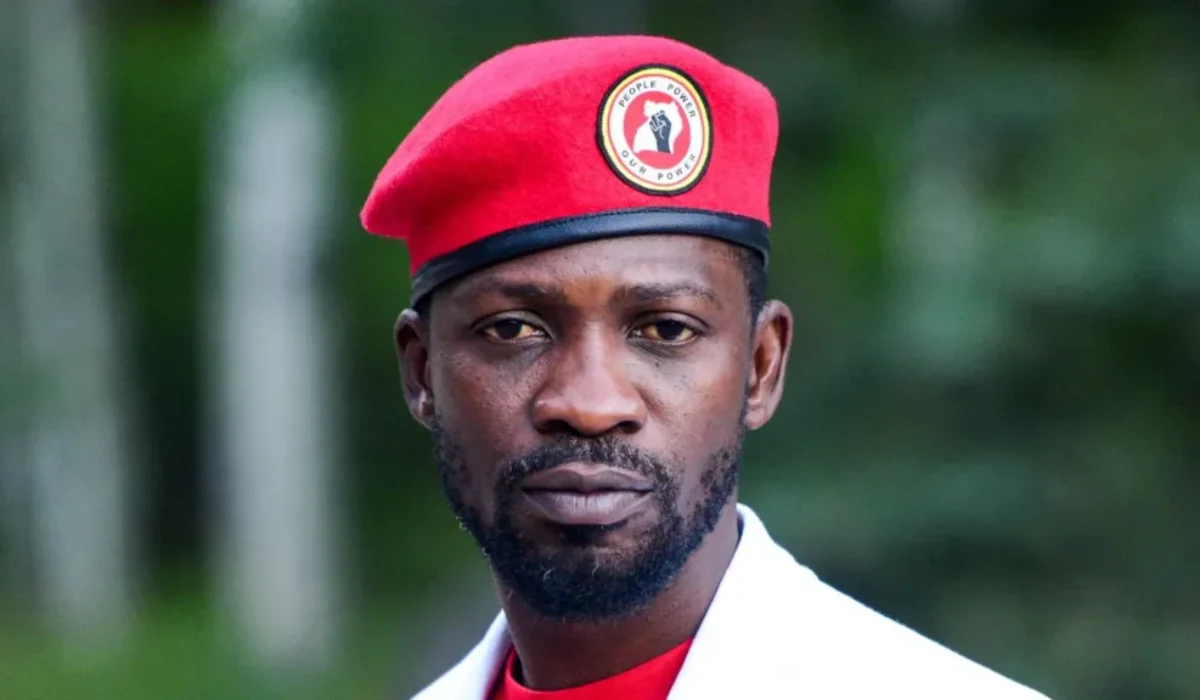
With his charisma, tenacity and everyman appeal, music star Bobi Wine has shaken up Ugandan politics.
Since his career pivot a decade ago, the 43-year-old has become a major thorn in the side of President Yoweri Museveni, an 81-year-old who has been in power for 40 years.
Bobi Wine has enchanted legions of young Ugandans, a demographic that makes up a large portion of the country’s population. Having grown up in the slums of the capital, Kampala, he dubbed himself the “ghetto president” and campaigns on issues such as youth unemployment and human rights.
On 15 January, Bobi Wine, whose real name is Robert Kyagulanyi Ssentamu, after the former Zimbabwean President Robert Mugabe, will compete against Museveni in a presidential election for the second time. But the odds are stacked against him.
Since entering politics, the self-styled revolutionary has been imprisoned and faced several criminal charges.
His plight has piqued attention around the world – in 2018, musicians including Coldplay’s Chris Martin and Gorillaz frontman Damon Albarn, signed a petition demanding his release from custody.
Wine was held on charges relating to the illegal possession of firearms, but the case was widely viewed as being politically motivated. He was subsequently also arrested for treason, but eventually, all of these cases were dropped.
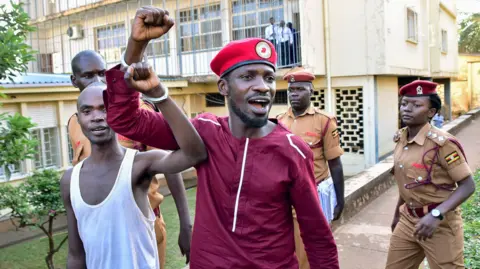
There was further outrage in 2021, when the police shot at Bobi Wine while he was campaigning.
“I am the most connected candidate to the population,” he told the BBC during his campaign for the forthcoming election.
“That is why among the eight candidates, I am the most hounded, I am the most harassed, I am the most feared.”
The authorities have repeatedly denied that the arrests of Bobi Wine, and supporters and members of his National Unity Platform (NUP) party, have been political. They say any detentions have been necessary to maintain law and order.
The president has also accused Bobi Wine of holding violent rallies in built-up areas, putting his supporters and the general public at risk – an allegation denied by the opposition leader.
When Museveni took office in 1986, Bobi Wine was just about to turn four.
Museveni and his rebel National Resistance Army (NRA) had seized power in an armed uprising.
Bobi Wine’s grandfather, Yozefu Walakira, was part of a different rebel contingent but from time to time during the conflict, he hosted Museveni in his home.
Bobi Wine spent much of his childhood in Kampala. His mother Margaret Nalunkuuma, a nurse, was the main breadwinner and raised him on the land she bought in the Kamwokya slum.
As a teenager, Bobi Wine gained a passion for the arts. He attended Uganda’s prestigious Makerere University, earning a diploma in music, dance and drama in 2003. He met his wife and the mother of his four children, Barbara “Barbie” Itungo, when he was a student and they starred in the same play.
After university, Bobi Wine embarked on a music career, branding his craft “edutainment”, that is, entertainment that educates. One of his earliest hits, Kadingo, was a song about personal hygiene.
His music, which features elements of reggae, Afrobeats and traditional Ugandan rhythms, gained a large following, and established him as a champion for social and political change.
Despite his mounting fame, Bobi Wine chose to continue recording in a music studio he had built in the Kamwokya slum. He also worked as an actor.
In 2016, many of the country’s famous musicians backed President Museveni’s re-election. Bobi Wine, however, held out.
He released a song named Situka, in which he mused: “When the going gets tough, the tough must get going, especially when leaders become misleaders and mentors become tormentors.”
The following year, Bobi Wine turned his hand to politics.
He ran in a by-election for the Kyadondo-East constituency as an independent candidate, facing politicians from the ruling NRM and the FDC, which was Uganda’s second-biggest party at the time.
He won by a landslide, securing more than five times the total votes of his NRM opponent.
Around this time, Bobi Wine developed the People Power movement, a pressure group campaigning for better democratic and social conditions.
Members began wearing red berets, which to this day remain a trademark for the opposition leader.
After Bobi Wine was repeatedly blocked from registering People Power as a political party, he joined the lesser-known, already-registered NURP. The party then changed its name to the NUP and Bobi Wine was chosen to be its leader.
By 2021, he was ready to challenge Museveni in the presidential election. In the run-up to the vote, dozens of people, many of whom were believed to have been shot by the security forces, were killed. Bobi Wine ultimately lost the election, gaining 35% of the vote compared to Museveni’s 59%.
Two years later, the NUP leader’s storywas immortalised in a National Geographic documentary, titled Bobi Wine: The People’s president. The film was distributed globally and earned an Oscars nomination.
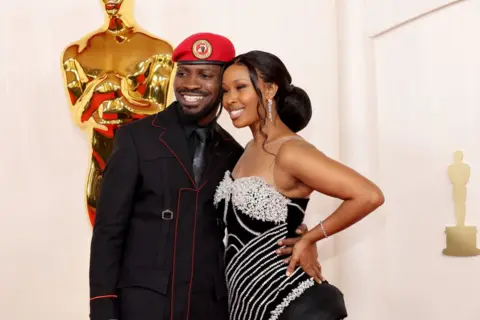
Despite his Hollywood credentials, Bobi Wine’s politics have not shifted much since he broke out almost a decade ago.
He remains proud of his humble background and still focuses his campaigns around issues like corruption, youth unemployment and wealth redistribution.
But there is a concern that should, against all odds, he become president, his background could count against him.
The military is influential in Ugandan politics – after all, they have deposed or attempted to depose numerous leaders since the nation became independent in 1962.
As Bobi Wine does not have a military or ministerial background and, conversely, cut his teeth in the creative sector, it may be tough to get the armed forces to take him seriously as president.
This is a view he rejects.
“Uganda has been ready for a civilian leader since time immemorial,” he insists, adding that according to Uganda’s constitution, the military must be subordinate to the civilian authority.
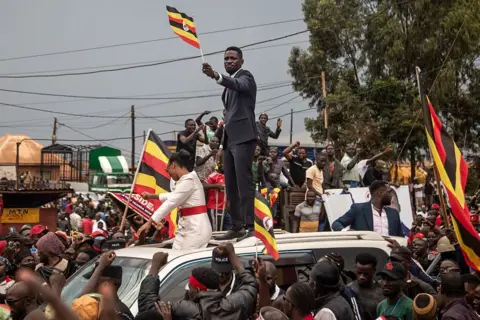
In the run-up to voting day, Bobi Wine has been campaigning across the country, often wearing a protective flack jacket andhelmet.
Footage shows his supporters accompanying his convoy, braving tear gas and water cannon fired by the security forces.
At a stop in northern Uganda, uniformed men whipped Bobi Wine’s supporters with sticks as they formed a human shield around the opposition leader.
His backers remain steadfast and committed, packing out rallies despite the risk of violence.
Bobi Wine is also undeterred.
“This election is about liberation,” he says. “It is about freedom, it is about people asserting their voices. We are asking people to come out and protest in the ballot box.”